Value Added Tax (VAT) is amongst the most confusing calculative taxes, yet it affects almost every business and consumer in the UK. Be it a small business owner, freelancer, online seller, or consumer, understanding the UK VAT rates in 2025 will be very important regarding pricing, compliance, and planning for cash flow.
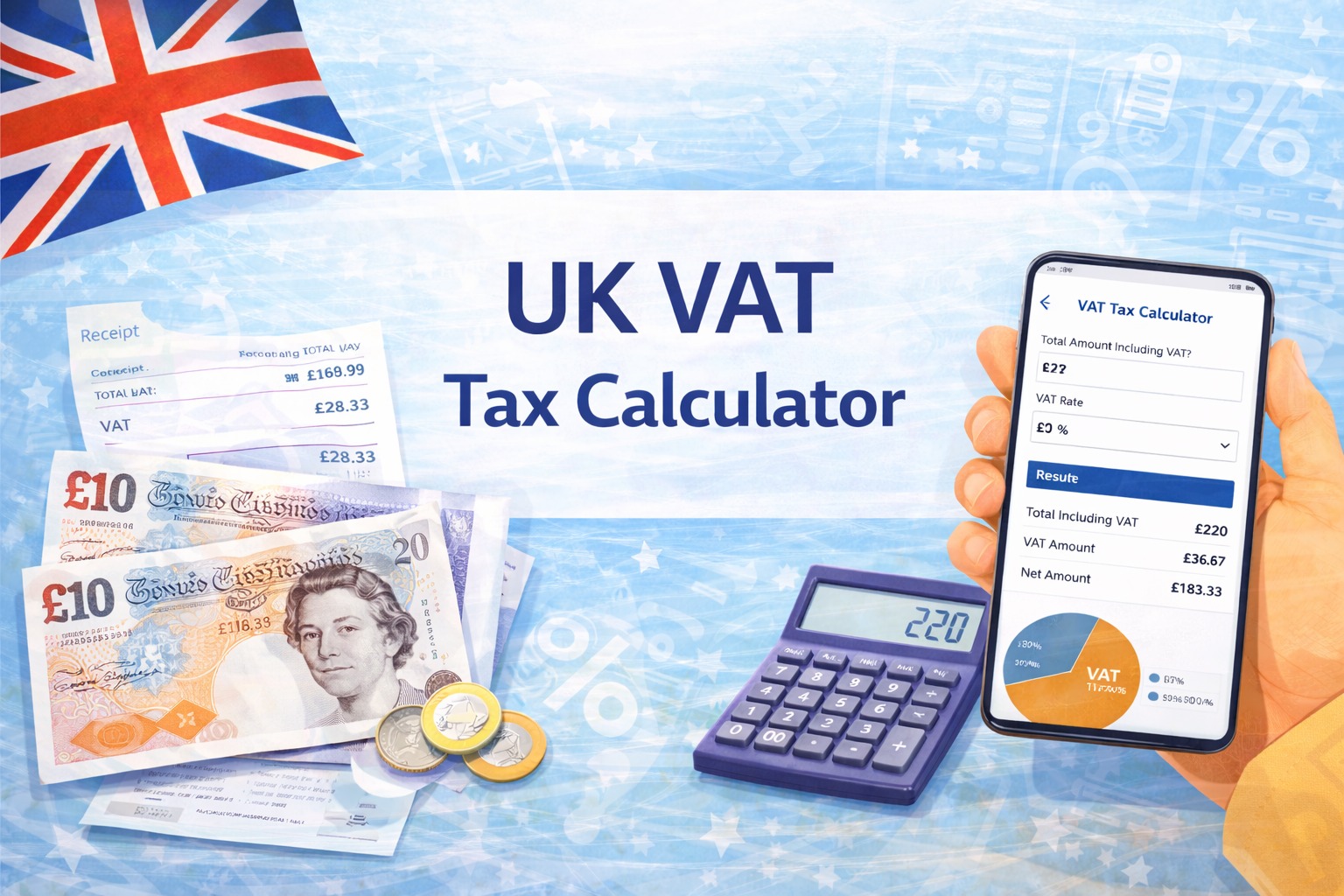
This guide explains UK VAT rates for 2025/26, what each rate applies to, when VAT registration is required, and how an online VAT calculator helps you calculate VAT accurately in seconds.
What is VAT in the UK?
Value Added Tax (VAT) is a kind of consumption tax charged on most goods and services sold in the UK. VAT is added to the base amount at one stage and deducted at the subsequent stages, while the consumer pays the ultimate cost of consumption.
The business acts as the collector of VAT, as it is first deducted from sales, and then, after that, the amount of VAT paid on business expenses is claimed.
Who Needs to Register for VAT within the UK?
You are obliged to register for VAT in cases where:
- Your VAT-taxable turnover exceeds the VAT threshold
- You expect to exceed the threshold within the next 30 days
- You voluntarily choose to register (even below the threshold)
VAT registration enables business enterprises to charge VAT and reclaim VAT on qualified purchases.
UK VAT Rates 2025/26 Explained
The UK applies three main VAT rates, which depend on the goods or services.
Standard Rate VAT (20%)
The standard VAT rate of 20% is applied to most goods and services, such as:
- Professional services
- Electronics and appliances
- Clothing and footwear
- Business services
- Digital products
This is the rate most businesses deal with daily.
Reduced Rate VAT (5%)
The reduced VAT rate of 5% applies to specific goods and services, including:
- Domestic Energy (Gas & Electricity)
- Certain improvement works at home
- Child car seats
- Some health and mobility products
This is to accommodate the reduced rate, which should cover necessary or socially important services.
Zero Rate VAT (0%)
Zero-rated items are still VAT-taxable but charged at 0% VAT. This implies that businesses can reclaim VAT on related costs.
Most common items that are zero-rated include the following:
- Most food and groceries
- Children’s clothing and shoes
- Books, newspapers, magazines
- Public transport
- Prescription medicines
Zero-Rated vs VAT Exempt: Key Difference
There are many who mistakenly think that VAT-exempt and zero-rated supplies mean the same thing.
| Zero-Rated VAT | VAT-Exempt |
|---|---|
| VAT rate = 0% | No VAT charged |
| VAT reclaim allowed | VAT reclaim not allowed |
| Counts toward VAT threshold | Does not count |
Understanding this difference is key to proper VAT returns.
How VAT Is Calculated
Two ways are generally used to calculate VAT:
Adding VAT to a Net Price
Net price × VAT rate = VAT amount
Net price + VAT = Gross price
VAT Removal from a Gross Price
Gross price ÷ (1 + VAT rate) = Net price
Gross price – Net price = VAT amount
Manual calculations are time-consuming and prone to errors, most especially when dealing with multiple VAT rates.
What is an Online VAT Calculator?
An online VAT calculator is a tool that shows instantaneous calculations:
- VAT added to the net price
- VAT is included in the gross price
- Net, VAT, and gross amounts
- VAT at 20%, 5%, or 0%
It will eliminate guesswork and guarantee the right VAT calculation for invoices, prices, and accounts.
Why use a UK VAT calculator in 2025?
It is helpful to use a UK VAT calculator in the following ways:
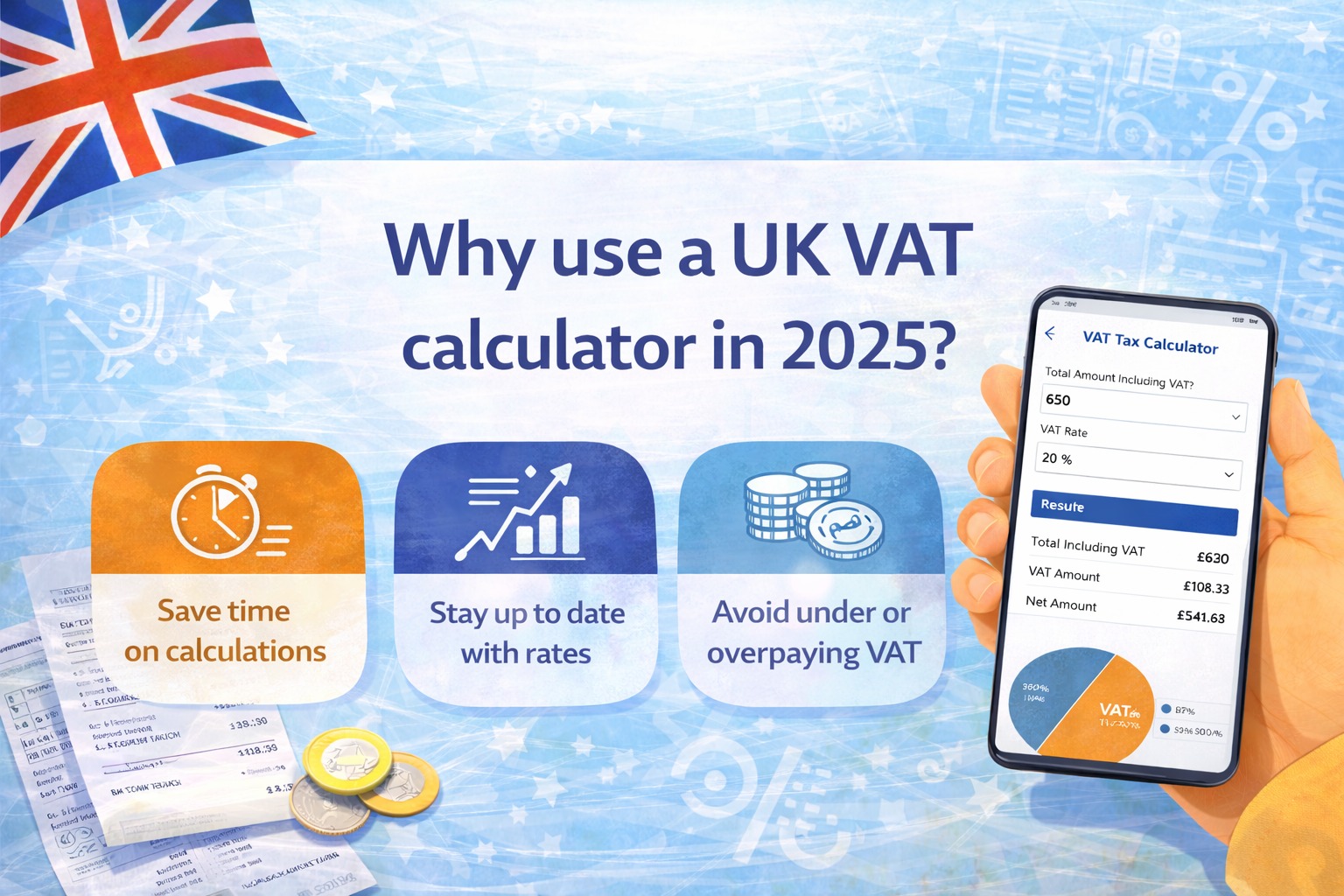
- Calculate VAT instantly
- Avoid pricing mistakes
- PREPARE Accurate VAT Invoices
- Minimize accounting errors
- Save time on manual calculations
It is particularly handy for small businesses, freelancers, eCommerce sellers, and contractors.
Information needed for the calculation of VAT
In using a VAT calculator, you shall generally need:
- Net price or gross price
- Applicable VAT rate 20%, 5%, or 0%
- Type of transaction (Sale or Purchase)
That's it; results are generated instantly
VAT Returns & HMRC Compliance
The following must be done by a VAT-registered business:
- Submit VAT returns (normally quarterly)
- Pay any VAT owed to HMRC
- Keep accurate VAT records
- Use Making Tax Digital (MTD) compliant software where required
It is important to calculate the VAT correctly in order to avoid penalties and interest charges.
Avoid Common VAT Mistakes
- Applying an inappropriate VAT rate
- Confusing zero-rated with exempt items
- Forgetting to charge VAT after registration
- Incorrect VAT deductions from gross prices
- Using outdated VAT rates or thresholds
An updated online VAT calculator UK prevents such kinds of issues.
Conclusion: Master UK VAT in 2025
Understanding UK VAT rates in 2025/26 is central to compliance and profitability. It makes all the difference when setting prices, issuing invoices, or filing VAT returns, all with a proper understanding of how VAT works and the right tools to help.
With a reliable UK VAT calculator, you shall get the confidence, accuracy, and control that you need to save time and minimize mistakes that likely end up being costly.