National Insurance Contributions (NICs) are one of the most significant and least understood items that appear on a payslip in the UK. In 2025, employees and self-employed individuals will continue to pay National Insurance Contributions alongside income tax, which will impact their take-home pay, long-term benefits, and pension entitlement.
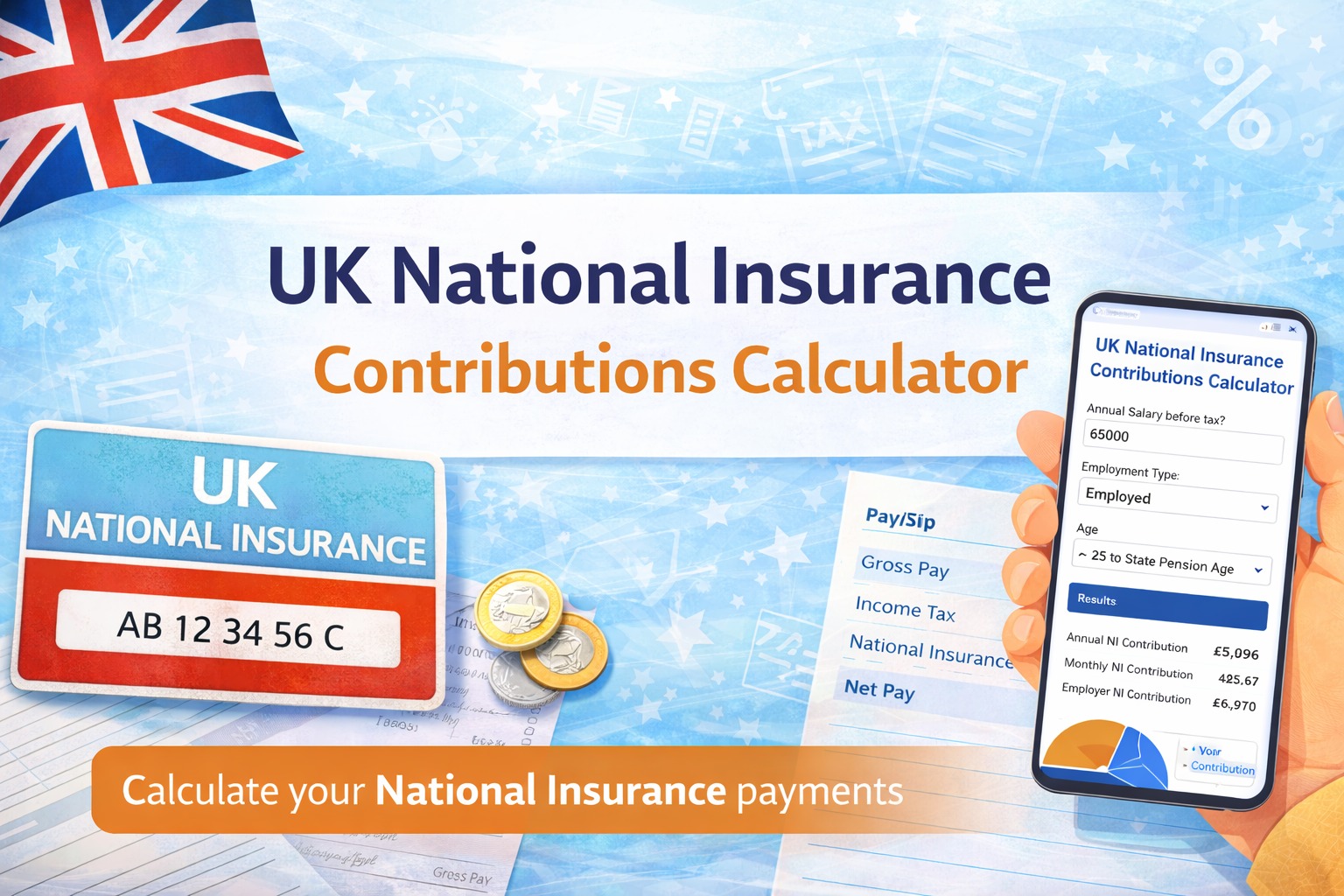
This resource describes UK National Insurance contributions 2025/26, National Insurance contributions, who pays which amount, and how you can determine National Insurance contributions using a National Insurance calculator.
What Is National Insurance in the UK?
National Insurance is a compulsory contribution towards financing significant social benefits in the following areas:
- State Pension
- NHS and healthcare services
- Statutory Maternity and Parental Pay
- Unemployment and Sickness Benefits
Although gathered with PAYE, National Insurance is not the same as income tax. It has its own terms, contribution rates, and thresholds.
Who Needs to Pay National Insurance?
Normally, you will pay National Insurance Contributions if you are:
- An employee who earns over the NI threshold
- Self-employed and earning profits
- An employer pays employees
- Working multiple jobs
- Below State Pension age
Once you attain State Pension age, your employee National Insurance contributions usually cease, although you may continue working.
National Insurance Contributions and Classes Explained
National Insurance contributions are also divided into different classes, depending on how you earn income.
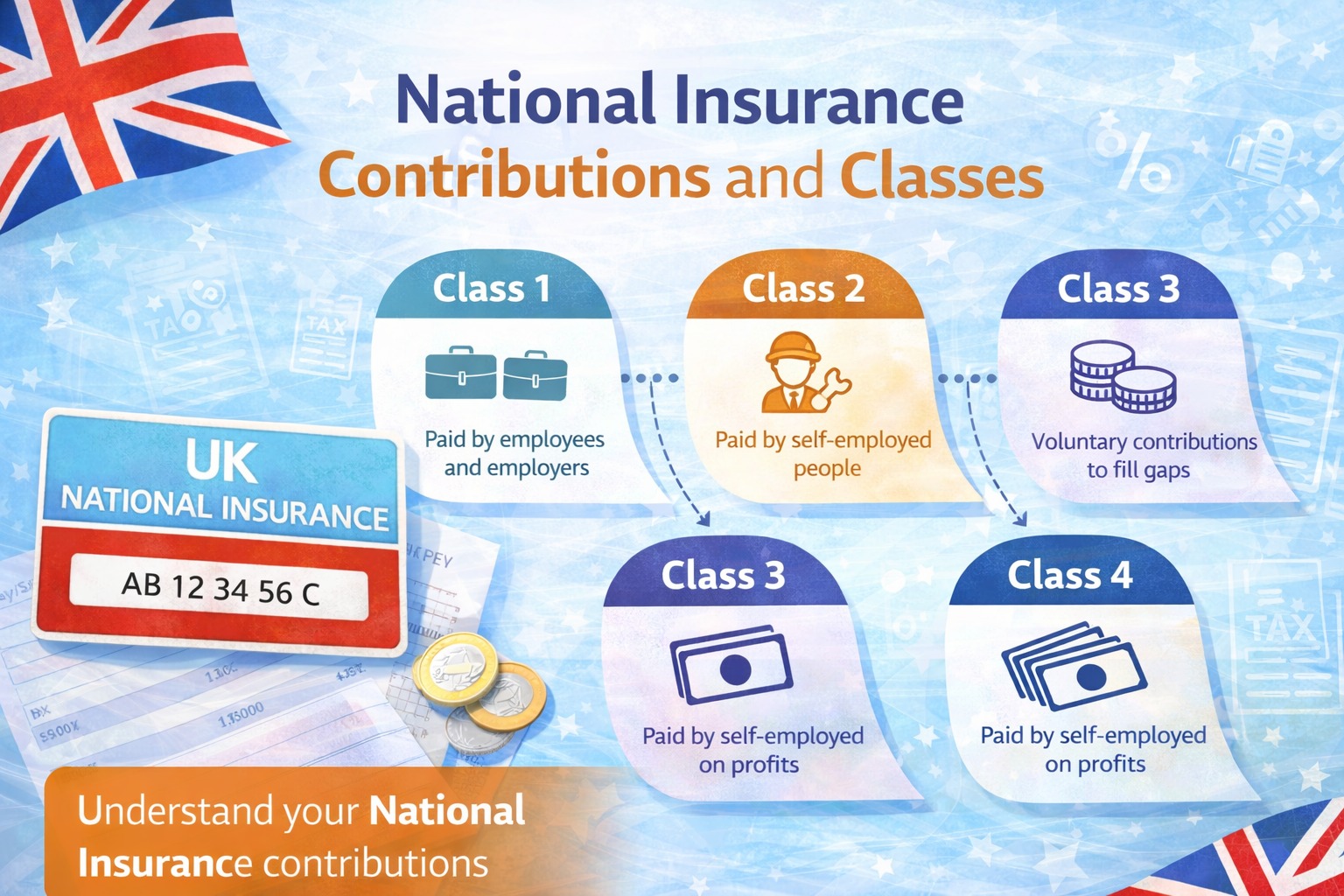
Class 1 - Employees
- Automatically deducted through PAYE
- Shown on your payslip
- Paid on Salary, Bonuses, and Overtime
CLASS 1 Employer Contributions
- Paid by employers only
- Does not affect employee take-home pay.
- Increases total employment cost
Class 2 - Self-Employed
- Flat weekly contribution (where applicable)
- Assists in the protection of the State Pension entitlement
Class 4 – Self-Employed
- Percentage-based contribution on profits
- Calculated through Self-assessment
UK National Insurance Contributions Rates 2025/2026 (Employees)
For most UK employees in the 2025/26 tax year:
- 0% for earnings below the Primary Threshold
- Main rate on earnings between the threshold and the Upper Earnings Limit
- Reduced rate on earnings above the Upper Earning Limit
Unlike income tax, National Insurance contributions are computed per pay period (weekly or monthly), not annually.
Employer National Insurance Contributions 2025
Employers also pay required to contribute National Insurance for employees earning above the secondary threshold.
Key points:
- Paid in addition to gross salary
- Not deducted from employee wages
- Important for businesses budgeting payroll costs
It can be beneficial to understand employer NI contributions, which is useful when comparing gross salary vs total compensation.
National Insurance for the Self-Employed
If you're self-employed, National Insurance contributions work differently from PAYE:
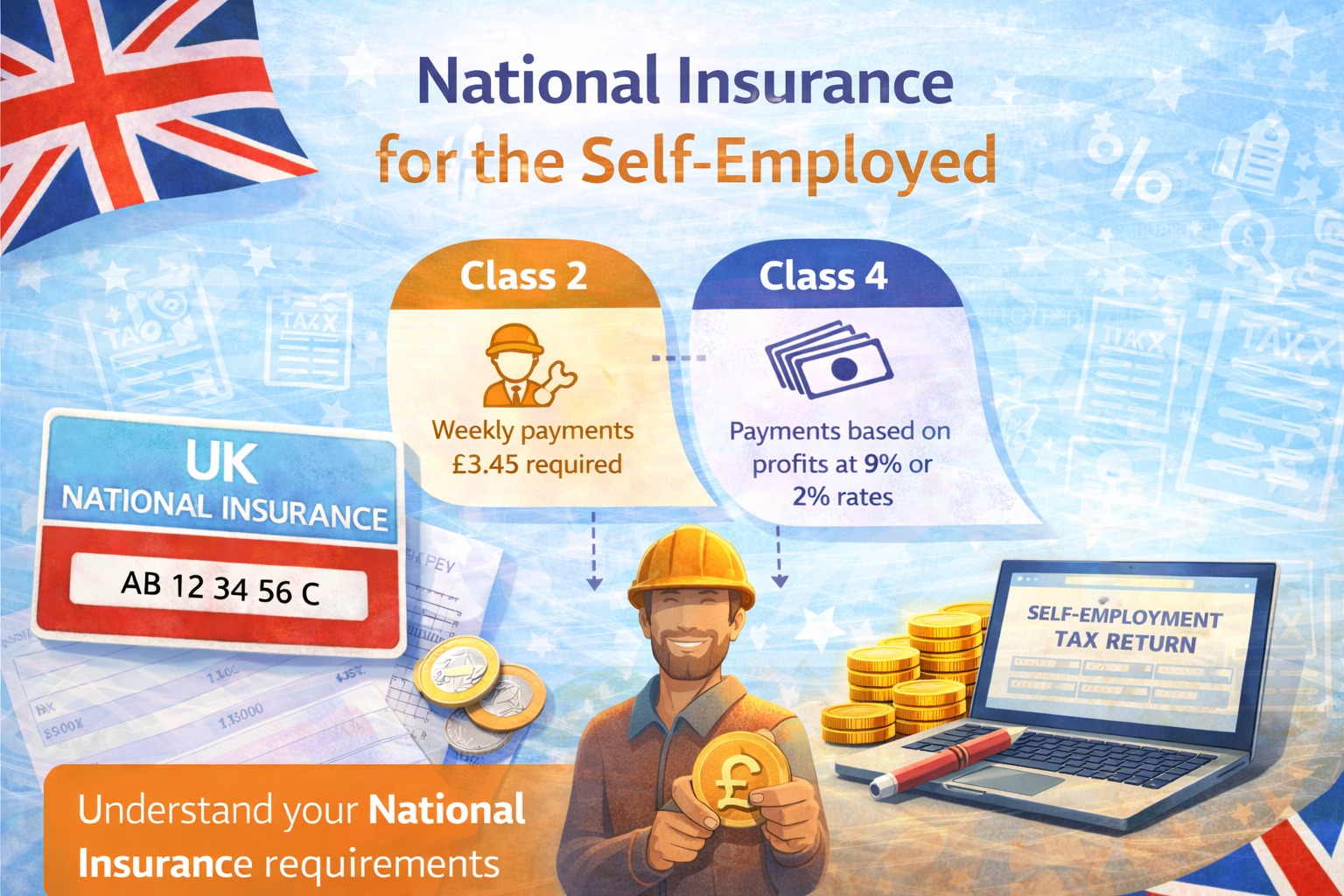
- Class 2 NI: A fixed contribution (subject to profit levels)
- Class 4 NI: Percentage of profits above certain thresholds
These contributions are computed and made via your self Assessment tax return, not payroll.
How National Insurance Is Calculated
Generally, national insurance contributions. It is calculated based on the following:
- Gross earnings/trading profits
- National Insurance class
- Earning thresholds
- Current NI Rates
Since NI resets each pay period, your deduction contribution may change from month to month depending on how your income varies.
What Is a UK National Insurance Calculator?
A UK National Insurance calculator is an online tool that estimates:
- Employee NI contributions
- Employer NI costs
- Self-employed NI payments
- Net Salary after NI deductions
It uses the latest 2025/26 NI thresholds and rates applicable. It does not require calculations to be performed.
Why Use a National Insurance Calculator in 2025?
Using an updated National Insurance calculator UK can help you:
- See your real take-home pay
- Budget monthly expenses correctly
- Compared job offers objectively
- Estimator for self-employment tax bills
- Identify pension or salary sacrifice schemes
It’s particularly useful if you get bonuses, overtime pay, or irregular income.
To get precise estimates, you'll typically need:
- Gross salary/annual profit
- Pay Frequency (monthly/weekly)
- Employment status
- Pension contributions
- Age (NI rules change with State Pension Age)
Your payslip or tax return will be matched accurately if you enter reliable details.
National Insurance vs Income Tax: Key Differences
| National Insurance Contribution | Income Tax |
|---|---|
| Funds Benefits & State Pension | Funds General Government Spending |
| Calculated per Pay Period | Calculated Annually |
| Stops at State Pension age | Continues regardless of age |
| Separate Thresholds | Uses tax bands |
Both deductions reduce take-home pay, but they have different rules.
National Insurance Common Errors to Avoid
- Confusing NI with Income Tax
- Ignoring National Insurance contributions that are paid by the employer
- Establishing NI thresholds based on old standards
- Forgetting NI rules change after pension age
- Overlooking NI, where multiple sources of income exist
A good UK NI calculator will also help avoid such problems.
Conclusion: Understand Your National Insurance in 2025
Knowledge about how UK National Insurance Contributions work in 2025/26 financial year gives you the power to manage your finances. National Insurance Contributions (NICs) affect your monthly finances, as well as your long-term benefits and pension eligibility.
Whether it’s for work, for running your own business, or for calculating employee contributions, keeping up to date with what current National Insurance calculators offer is, without a doubt, the easiest way to gain information on where you stand.