Property taxes are one of the highest ongoing costs of homeownership—and one of the easiest to underestimate. Rates vary widely by state, county, city, and school district, and your bill can change after a purchase, remodel, or reassessment. A US property tax calculator helps you estimate your annual property tax, plan your monthly budget, and avoid surprises at closing.

This homeowner-friendly guide explains how property taxes work, what drives your bill, and how to estimate your costs accurately.
What Is Property Tax in the US?
Property tax is a local tax charged on real estate—typically based on your home’s assessed value and the local tax rate (millage). Property taxes fund essential services such as:
- Public schools and libraries
- Police, fire, and emergency services
- Roads, parks, and local infrastructure
- County and city operations
Unlike federal income tax, property taxes are mainly set and collected at the local level, which is why two similar homes in different counties can have very different tax bills.
Why Use a US Property Tax Calculator?
A reliable property tax estimator helps you:
- Estimate annual property taxes before buying a home
- Budget your monthly mortgage payment (PITI) more accurately
- Compare neighborhoods using the property tax rate by country
- Plan for changes after renovations or reassessment
- Evaluate the impact of exemptions (like a homestead exemption)
If you’re shopping for a mortgage, it also helps you estimate whether you’ll have an escrow account and how much you’ll pay monthly.
How Property Tax Is Calculated (Simple Formula)
Most property tax bills follow this structure:
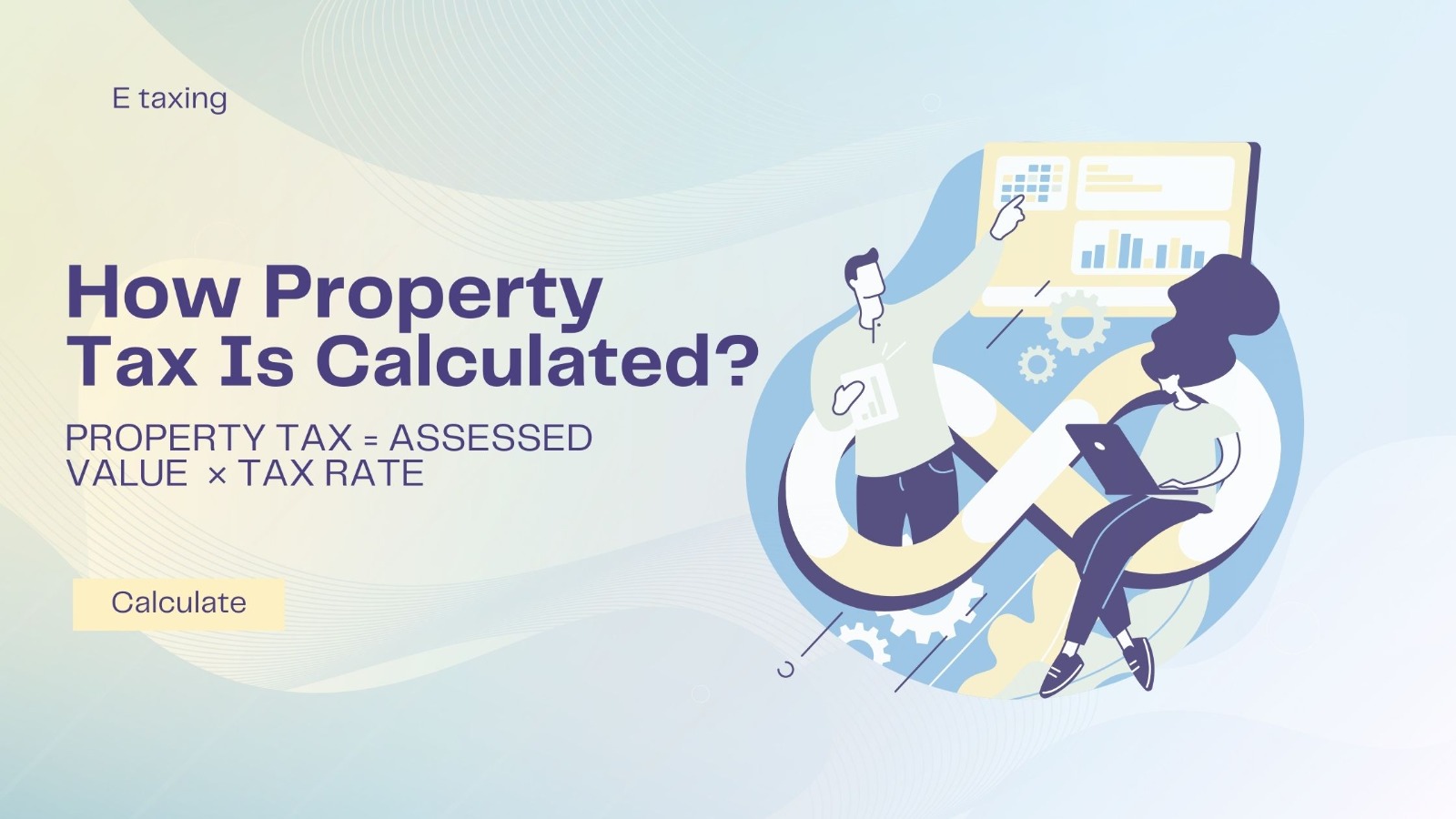
Property Tax Formula
Annual Property Tax = Assessed Value × Tax Rate
Because tax rates are often expressed as a percentage or “mills”:
Example: 20 mills = 2.0%
Example Calculation
- Assessed value: $300,000
- Local tax rate: 2.1%
Monthly equivalent = 6,300 ÷ 12 = $525/month
A US property tax calculator does this instantly and can include exemptions and assessment ratios where applicable.
Assessed Value and Market Value (The Reason Your Tax Bill is Different from Zillow)
Homeowners tend to assume taxes are assessed according to market value, though it is likely the assessed value, possibly:
- Updated every year, occasionally, or with every sale
- Limited by State “Assessment Caps”
- Determined based on the assessment ratio (not necessarily 100%)
Key Terms
- Market value: The price your property would bring in the marketplace
- Assessed value: This is the value on which property tax is based.
- Taxable value: assessed value minus exemptions/credits
Thus, in certain states, you might find that even if the market value jumps, the taxable value may increase very gradually. On the other hand, in certain states, reassessment may lead to an increase.
What Determines Your Property Tax Rate?
Property tax rates are local. Your total rate may include multiple components, such as:
- County rate
- City/municipal rate
- School district rate
- Special district assessments (water, parks, transit, etc.)
That’s why homeowners search for “property tax calculator by state”—but the most accurate estimates come from county-level or even address-level data.
Common Homeowner Exemptions That Lower Property Taxes
Many states and counties offer exemptions that reduce taxable value, including:
Homestead Exemption
A homestead exemption may reduce your taxable value if it is considered your primary residence. In addition, many regions have an annual growth restriction concerning homesteaded parcels.
Senior, Veteran, and Disability Exemptions
The programs can cut taxes deeply, although eligibility requirements differ.
Property Tax Credits
Some states have credits or "circuit breakers" that are income and property-tax-dependent.
Tip: If you recently moved, you may need to apply—exemptions are often not automatic.
Escrow Property Taxes: How They Affect Your Monthly Mortgage Payment
Many lenders collect property taxes through an escrow account. That means you pay a portion each month with your mortgage payment, and the lender pays the tax bill when due.
Your monthly payment often includes:
- Principal
- Interest
- Property taxes (escrow)
- Homeowners insurance (escrow)
If taxes rise, your lender may increase your monthly payment to cover a shortfall—one of the most common “why did my mortgage go up?” surprises.
Buying a Home? Property Tax Planning Tips Before You Close
When estimating taxes for a new purchase, watch for these common issues:
1. Reassessment After Sale
In many counties, the assessed value resets closer to the purchase price after a sale. The seller’s tax bill may be much lower than yours will be.
2. New Construction Can Be Under-Taxed at First
A listing may show low taxes because the home was taxed as vacant land or partially completed.
3. Exemptions May Not Carry Over
The seller’s homestead or senior exemption usually won’t transfer automatically.
Best practice: Use a US property tax calculator and also ask the county assessor how reassessments work locally.
Property Tax Increases: What Can Cause Your Bill to Rise?
Your property tax bill can go up due to:
- Increased assessed value after reassessment
- Home improvements (new addition, finished basement, pool)
- Voter-approved levies (often school-related)
- Expiring exemptions or missed filings
- Changes in local budgets and rates
Even if your assessed value stays flat, rates can change based on local funding needs.
How to Appeal Your Property Tax Assessment (If It Seems Too High)
If your assessed value is higher than similar nearby homes, you may be able to appeal.
Steps That Often Help:
- Review your property record for errors (square footage, lot size, features)
- Pull comparable sales (“comps”) near your assessment date
- Gather photos or repair estimates if your home has issues
- File before the deadline (deadlines are strict)
A successful property tax appeal can reduce your bill—sometimes for multiple years.
Quick Checklist: Using a Property Tax Calculator the Right Way
To estimate, the following information will be needed:
- Property address or ZIP code
- Market or buy price estimation
- Assessment Ratio - County (If applicable)
- Gross Domestic Product
- Any exemptions that you qualify for
- Rules of reassessment beyond purchase
FAQs: Property Tax Calculator & Homeowner Planning
Q: How much are property taxes on a $400,000 home?
A: It depends on your local tax rate and assessed value rules. If the effective rate is 1.5%, taxes are about $6,000/year. If it’s 2.5%, about $10,000/year.
Q: What is the average property tax by state?
A: Averages vary widely and can be misleading. Percentages in the county and city would carry more significance than the state averages. Using a property tax calculator by the county would act as a good guide instead.
Q: Are property taxes deductible?
A: Property taxes can also be deductions for itemizers, but there may be limitations (such as those on SALT deductions); however, you should consult IRS changes or a tax expert.
Q: Do property taxes go down when you pay off your mortgage?
A: No—property taxes are separate from your loan. You’ll still owe them as long as you own the home.
Final Thoughts: How a US Property Tax Calculator Helps to Prevent Budget Blowouts
Property taxes mean much more than a line item on a statement, impacting how much one pays on their monthly bill, to where it may make sense to purchase a home. With a US property tax calculator, one can determine annual and monthly fees and make informed homeowner decisions.